Partnership 14 min
Oracle Launches Google TPUs on Rival Cloud Infrastructure
Oracle brings Google TPU 8t and 8i systems to OCI in 2027, the first outside Google Cloud. The move weakens single-vendor control of AI compute.
Jordan Hale2 minutes ago
Chips, data centers, and the trillion-dollar buildout
Compute, not capital, has become the binding constraint of the AI industry. Hyperscalers have announced over $660B in data center capex, frontier labs sign multi-year GPU leases worth tens of billions, and a single training cluster can consume the power of a small city. This hub tracks the silicon roadmaps, data center buildouts, supply chain moves, and compute economics that decide which AI companies can actually scale.
Oracle brings Google TPU 8t and 8i systems to OCI in 2027, the first outside Google Cloud. The move weakens single-vendor control of AI compute.
Anthropic commits up to $120.5 billion for SpaceX GPU capacity through 2029. The deal turns frontier model competition into a financing contest.

SpaceX confirms $40 billion in GPU financing for 2027 deliveries as AI credit tightens. The structure turns compute access into a balance-sheet contest.

Salience Labs closed a $125M Series B backed by AMD Ventures and Intel Capital to deploy optical switching chips that cut GPU networking power by 50%.
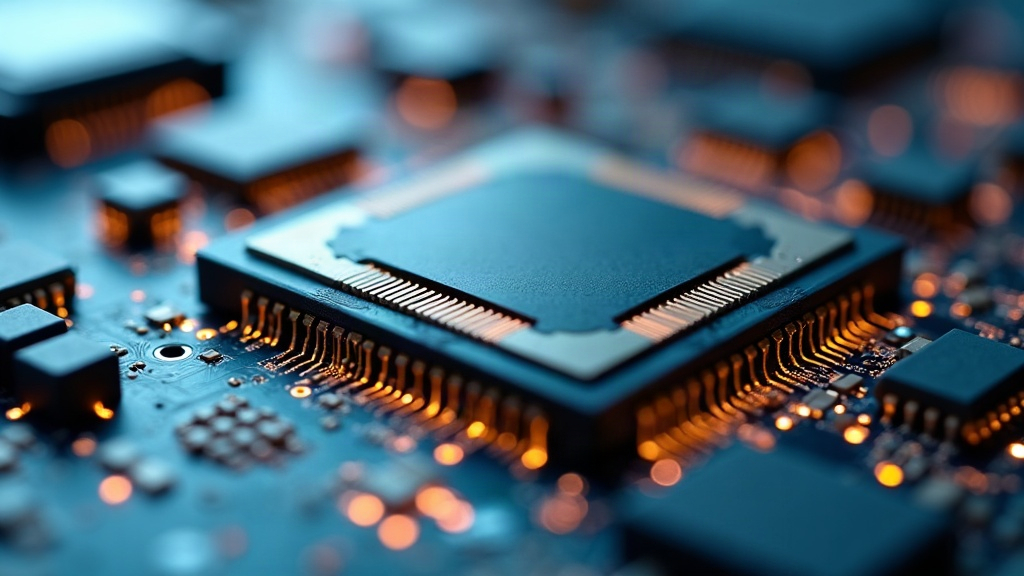
Microsoft's third-gen Maia 300 chip uses TSMC N2P and 288GB HBM4 to challenge Nvidia's grip on AI inference, targeting multi-gigawatt Azure scale.
Microsoft unveils Maia 300, claiming 40% more AI tokens per megawatt than Nvidia, with over 300,000 chips ordered for 2027 deployment.
Microsoft's Maia 300 chip delivers 40% more tokens per megawatt than leading GPUs and 7x the throughput of Maia 200, targeting full production in 2027.
Nvidia's China AI chip shipments dropped 44% in H1 2026 as Huawei doubled to 572K units, raising its share from 15% to 28% of the market.
Intel GPU D270 launches at OCP Summit with 1.3 PFLOPS of FP8 compute and a 350-watt air-cooled design that fits existing data center infrastructure.
At Wuhan's AI Expo, China's humanoid makers hit a mass production milestone. UBTECH now ships 10,000 robots yearly while US firms scramble to match scale.
Nvidia plans to invest in inference chip rival d-Matrix while pulling it into NVLink Fusion to absorb competition and cement platform dominance.
US utilities warned Amazon its Mississippi AI data centers face disconnection during peak demand, exposing how AI power growth breaks the grid.
Broadcom is arranging over $50 billion in private credit for OpenAI's Nexus custom chip program, with Apollo and Blackstone among lenders eyeing the deal.
Google signs a $4.3 billion, 20-year nuclear deal with Constellation for 890 megawatts as AI data center power demand surged 37% in 2025.
Anthropic's Claude Haiku 5.5 launches at $0.10 per million tokens, 75% cheaper than Haiku 4.5, with 72.4% OSWorld computer use scores.
Mistral Large 4 launches with 1.05T parameters and 1M-token context, with open weights arriving October 31 to challenge closed frontier labs.
AMD CEO Lisa Su says AI chip demand outpaces global supply through 2027, with a 3-5 year planning horizon and a committed supply ramp for 2027.
Morgan Stanley projects a 32GW AI data center power shortfall by 2028, with Nvidia shielded but memory and optics chip suppliers facing order delays.
Qualcomm becomes a net payer to Huawei for the first time as they sign the first 5G cross-license covering AI, compute, and networking patents.
Vistra secures a $4.2B DOE loan to uprate three nuclear plants in Ohio and Pennsylvania, adding 433MW as AI data center demand strains the grid.
Huawei and Qualcomm's multi-year patent deal covering AI, 5G, and compute pushes Huawei's licensing total past $6.9B, defying US-China tech tensions.
CME Group and Silicon Data launch H100 and B200 GPU rental index futures on NYMEX on October 5, giving AI buyers the first regulated hedging tool.

Tesla cut AI5 chip RAM to 96GB and AI6 to 144GB after memory supply limits blocked Optimus robot production, with 1 million units per year targeted.
Tesla cut AI5 memory 50% to 72GB and AI6 by 33% to 144GB, prioritizing Optimus production volume over raw compute performance in any individual unit.
AMD acquires Fei-Fei Li's World Labs for $8.2 billion in an all-stock deal targeting spatial intelligence for robotics and physical AI systems.
AI data centers hit a power wall as grid shortages delay 30 to 50 percent of 2026 capacity and interconnection queues run to 10 years.

Anthropic S-1 discloses $518 billion in decade-scale infrastructure commitments as it targets a $2 trillion IPO valuation after November elections.
Nvidia's Open Agent Safety Platform uses Vera CPUs and BlueField-4 DPUs to contain rogue agents in milliseconds, backed by 120 partners.
US and UK signed two AI fusion agreements at a London summit, linking supercomputing labs to accelerate commercial nuclear fusion and energy supply.
Nvidia fell 3.4% and the PHLX chip index lost 5.9% on September 14 as Amodei's AI safety essay forced markets to price a possibility they'd never modeled.